
Advanced Plastic Recycling: Building Sustainable, Auditable Global Supply Chains (Mechanical + Chemical)
The global economy depends on plastics, but the way plastics are produced, used, and discarded is under increasing scrutiny. Investors, regulators, and brand owners are demanding measurable progress on circularity, emissions reduction, and end-of-life accountability. In practical terms, that means moving beyond isolated recycling initiatives and building scalable, financeable systems that keep materials in productive use.
Klean Industries approaches this challenge as an infrastructure and supply-chain problem, not a marketing slogan. By combining proven engineering, project due diligence, and advanced conversion technologies, Klean helps stakeholders convert plastic waste liabilities into auditable circular commodities that can re-enter global supply chains with confidence.
Understanding the Current Landscape of Plastic Recycling
Plastic recycling remains constrained by real-world complexity: mixed polymers, contamination, inconsistent collection, and a fragmented value chain that often rewards disposal more than recovery. Mechanical recycling plays an important role, but it has limitations with multi-layer packaging, heavily contaminated streams, and mixed polyolefins, where yields and end-product quality can become prohibitive at scale.
For investors, the issue is not whether recycling matters, but whether a given project can reliably secure feedstock, meet permitting expectations, prove environmental performance, and deliver bankable product offtake. Improving outcomes requires technology choices that match the feedstock reality and a project development model that treats traceability and compliance as core design inputs, not afterthoughts.
Innovative Technologies in Plastic Recycling
Technology innovation is accelerating across sorting, cleaning, and reprocessing. At the same time, advanced recycling and chemical recycling pathways are increasingly being deployed to address plastics that mechanical systems struggle to process. When properly engineered and operated, these pathways can convert non-recycled plastics into valuable secondary feedstocks, supporting both fuels and petrochemical circularity strategies depending on local market demand.
Klean’s approach prioritizes performance and bankability. The company evaluates technologies through a commercial lens, aligns process selection to feedstock and regulatory conditions, and designs projects around long-term operability. This reduces execution risk and helps ensure that “recycling capacity” translates into real throughput, consistent product quality, and measurable environmental outcomes.
Strategies for Enhancing Collaboration in the Recycling Industry
The fastest gains in recycling performance typically come from better coordination across the value chain. Collection programs must align with the specifications required by processors, and processors must produce outputs that downstream buyers can trust and certify. When these requirements are mismatched, material value is lost and recycling economics collapse.
Digital infrastructure is now becoming as important as physical infrastructure. Traceability, chain-of-custody reporting, and real-time performance monitoring strengthen compliance, de-risk financing, and reduce disputes over product claims. Klean supports this direction by treating data integrity, audit readiness, and supply-chain transparency as part of the recycling solution, enabling stakeholders to demonstrate circularity with evidence rather than assumptions.
Best Practices for Improving Plastic Recycling and Sustainability
The most successful recycling programs begin with design choices that reduce downstream complexity. Packaging simplification, standardized materials, and clear labeling improve sorting yields and reduce contamination. Where products cannot be easily recycled mechanically, stakeholders need credible pathways that prevent landfill dependence and reduce environmental leakage.
On the project side, best practice is disciplined development: secure feedstock, validate conversion performance, build a defensible permitting plan, and structure offtake around stable, specification-based contracts. Sustainability claims should be backed by measurement, reporting, and verification that can withstand investor and regulatory review, including supply-chain emissions accounting and audited operational data.
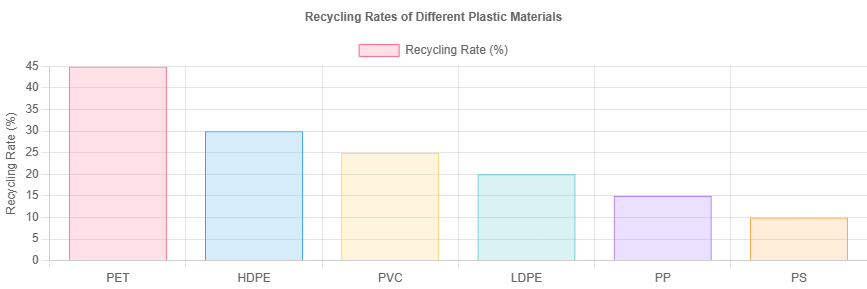
Chart: Comparing Recycling Rates and Environmental Impact
A useful way to communicate progress is to compare recycling pathways by three metrics: diversion from landfill and incineration, net emissions impact across the value chain, and circularity outcomes measured by the quality and end-use of recovered products. This framing helps decision-makers prioritize investments that maximize real-world impact rather than headline capacity.
The Role of Consumer Awareness and Market Trends
Consumer expectations continue to reshape packaging and procurement. Brands face pressure to increase recycled content, reduce virgin plastic dependence, and substantiate claims with credible reporting. This market pull is increasingly reinforced by policy instruments such as extended producer responsibility, recycled content requirements, and tighter reporting standards.
Packaging remains one of the most visible pressure points. Plastic bottles and containers represent a large and growing market, and the shift toward lightweighting, recyclable formats, and higher recycled content is pushing supply chains to secure dependable sources of recovered material. In parallel, interest in bio-based and compostable options is growing, but these routes still require careful system design to avoid contamination and unintended consequences in existing recovery infrastructure.
Unlocking Sustainable Solutions: How Klean Industries’ Intelligent Pyrolysis Platform Addresses the Global Tire Waste Crisis
Plastics are not the only hard-to-recycle stream that demands scalable solutions. End-of-life tires present similar challenges: durability, contamination, and environmental risk when mismanaged. Klean’s continuous pyrolysis solutions demonstrate how advanced thermal processing can convert difficult waste streams into valuable commodities, including recovered resources and energy carriers, while supporting circular supply chains.
For investors evaluating circular infrastructure, the takeaway is straightforward: technology selection matters, but so does execution discipline. Klean’s work across complex recycling and recovery projects is designed to reduce technology risk, strengthen compliance confidence, and deliver systems that can operate continuously in real market conditions.
Learn More:
- Plastic Recycling Solutions & Technologies
- Pyrolysis Technologies
- What Is Pyrolysis?
- KleanLoop SaaS & DApp
- Plastic Pyrolysis Blockchain
- Feasibility Studies
- Due Diligence Services
- Carbon Management Services
- Plastic-to-Low-Carbon Marine Fuel (Malta)
Request a Circular Supply Chain Recycling Assessment
Share your plastic feedstock mix, target outputs (circular feedstock, fuels, or chemicals), and compliance requirements; Klean will outline a bankable pathway covering feedstock security, permitting, traceability/MRV, and offtake structure.
You can return to the main Market News page, or press the Back button on your browser.
